Nathaniel Hawthorne once said, “Words -- so innocent and powerless as they are, as standing in a dictionary, how potent for good and evil they become in the hands of one who knows how to combine them.” Words, the cornerstone of which writing stands; writing, an outlet for all who know how to portray emotions through words and combine them to create a story whether it be a novel or novella, intricate or simple. This is the beauty of writing - the ability to stress opinions indirectly through character and plot development, and the tone that accompanies every flaw and asset, every decision to act or indecision. However, although any written piece is open for interpretation, only the author holds the key to the truth behind every turn of the story. The author naturally emphasizes what is important to him; therefore, any adaptation of a story is a corruption of the original author’s intent.
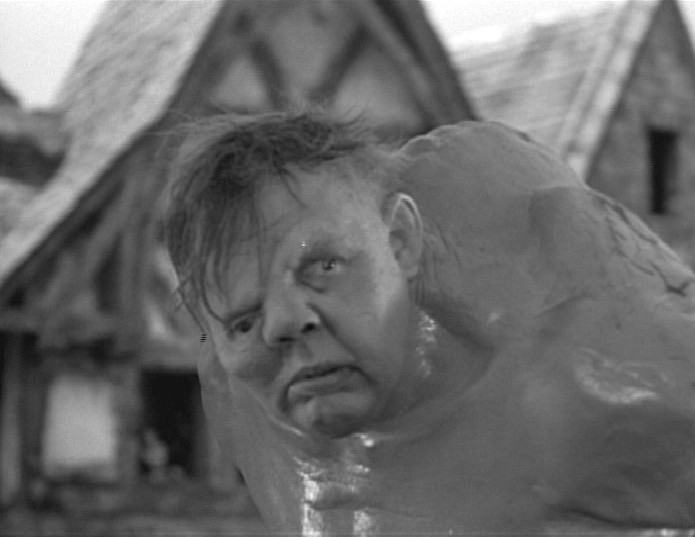
Take for instance, The Hunchback of Notre Dame written by Victor Hugo. When mentioned, images of a funny looking misshapen man accompanied by a beautiful gypsy may come to mind, who not surprisingly live ‘happily ever after.’

However, Disney’s adaptation is legions away from the images brought to mind by Hugo’s novel - images of a morbid man estranged from society not because he was an unfortunate looking orphan shown mercy by a priest like Disney portrayed, but because the sheer horror and disgust that accompanied his appearance damned him to a solitary life hidden within the confines of the Notre Dame cathedral, his only companions the cold and lifeless gargoyles.

Where
Disney heralds Quasimodo a hero by the conclusion of the film for saving Esmerelda and all ends happily, the novel remains in the utter disparity of Quasimodo’s existence. Instead of heroism, he receives torture. His only light is Esmerelda, a beautiful gypsy whose fate is intertwined with a grotesque hunchback. However, by the conclusion of the novel, his only light in a dark, miserable world, Esmerelda, is squelched when he finds her beautiful form hanging lifeless like a limp doll, devoid of all life. Quasimodo cries out
“There is everything I ever loved!” Unlike the Disney adaptation, the original novel ends in total desolation when Esmerelda’s remains are found with a hunchback’s remains curled around her, desperate to cling to any remnant of the happiness so cruelly stolen. The Disney adaptation barely holds any resemblance of the original story written by Victor Hugo. However, how many people know the true story of The Hunchback of Notre Dame as intended by Victor Hugo? If Hugo had aimed to write an uplifting novel, he would have; however, instead he wrote about the debasement of society.
Similarly the novel Les Miserables also written by Victor Hugo was corrupted by the film adaptation. Where the film ends at the suicide of Inspector Javert, the novel continues and delves into the complex relationship between Valjean, his adopted daughter Cosette, and her love interest Marius. However, this is left out of the movie and therefore leaves out information the author thought vital and therefore shifts the viewer’s focus.
Yet another example can be found in the differences between the Superman comic books compared to the movies. While in the books Superman struggled with depression and a desire to ignore his duty, the movies glamorized him as an eager hero. The movies also softened the original dark tone and focused on the romance of Superman.
As stories reappear in various forms of adaptations, although the basic premise may remain, the intention behind the story shifts as new authors stress different aspects, leaving the original author’s sincerity morphed. After stripping away all the mutations, one is left with the original, the truest, most significant form of any story.
.jpg/220px-Frankenstein's_monster_(Boris_Karloff).jpg)